The Twice-Daily Misting Mistake: Why Green Anoles Dehydrate in the First 60 Days
Green anoles show up at big-box pet stores for eight to fifteen dollars, usually sitting next to bearded dragons and leopard geckos as if they belong in the same starter-reptile category. They don't. A bearded dragon drinks from a bowl and tolerates a dry cage for days. A green anole (Anolis carolinensis) often won't drink from standing water at all, and a cage that's allowed to dry out between cleanings can desiccate a healthy anole within the first two weeks. The failure point for new keepers isn't feeding or temperature — it's water delivery, and specifically the habit of treating misting as optional.
Key takeaways
- Green anoles are adapted to drink moving water droplets (dew and rain), not still water in a bowl — a cage misted once a day or less is the most common first-60-days killer.
- Care-sheet consensus calls for misting twice daily, with daytime humidity around 60–70% and a nighttime rise toward 90% in a properly closed enclosure.
- A screen-topped enclosure — the style sold as a generic "reptile starter kit" — dries out fast enough that researchers have linked it to measurably less healthy anoles than glass-topped setups.
- An automatic mister ($35–$70) removes the single point of failure; it costs less over a year than one emergency reptile-vet visit, which commonly runs $75–$150 for an exam alone.
Figures checked: October 31, 2026.
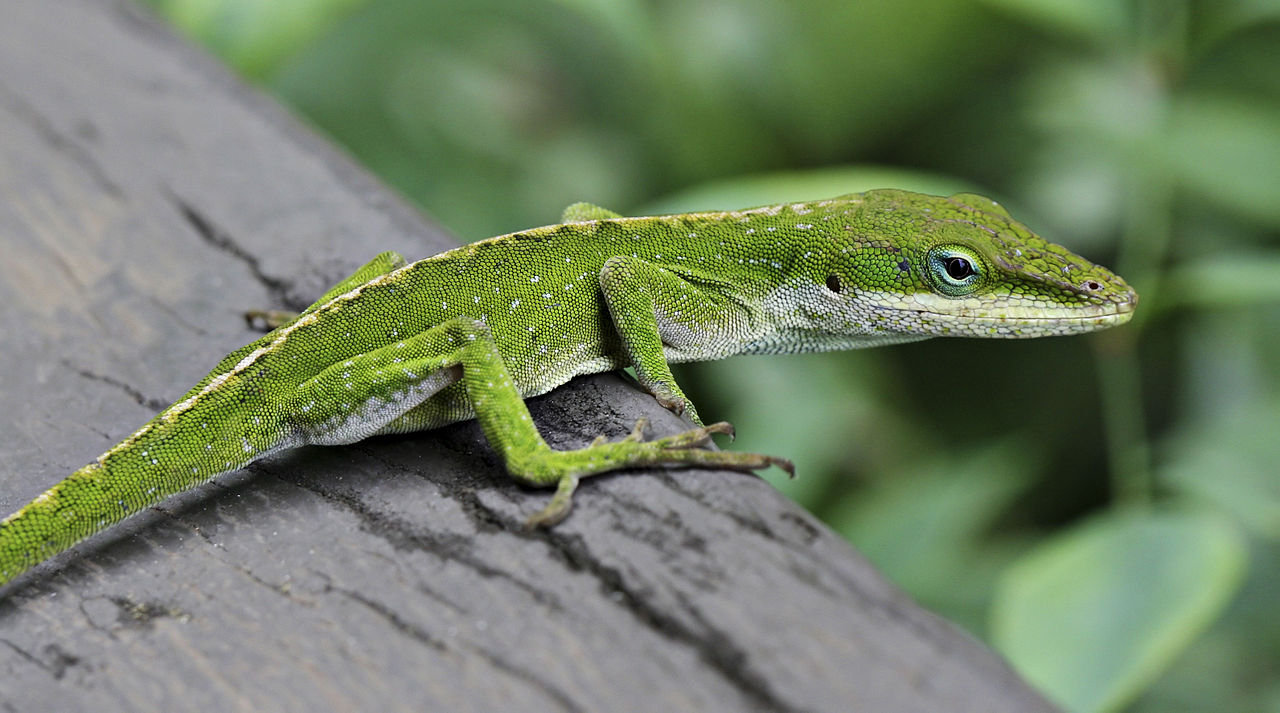
The four steps below are not a reading list; they are a sequence. Each step has to be finished before the next one can tell you anything useful, because a cage that cannot hold humidity makes a misting schedule meaningless, and a misting schedule without a gauge makes the 60-day signs impossible to interpret. Work through them in order before the animal arrives, not after the first scare.
Step 1. Buy the enclosure that holds humidity, and one animal rather than two
Green anoles are sold as the entry-level reptile — smaller enclosure, smaller price tag, no complicated UVB arguments. That framing isn't wrong about the cost, but it quietly implies the husbandry is simple too. It isn't. An eight-dollar price tag and a complex water-delivery requirement can coexist, and the mismatch between what the price suggests and what the animal actually needs is exactly where new keepers get into trouble.
Pet stores commonly sell green anoles in pairs or small groups because they're cheap and the animals look identical to a non-expert. Male green anoles are territorial and will fight — sometimes to the point of serious injury — if housed together. ReptiFiles' care sheet lists this specifically as a common early mistake, alongside undersized enclosures and heat lamps mounted where a climbing anole can contact the mesh and burn itself. None of these are exotic failure modes; they're the predictable result of buying the generic "reptile starter kit" marketed at the register rather than a setup built around what this specific species needs.
Step 2. Replace the water bowl with a twice-daily misting routine, then measure it
Anolis carolinensis evolved to drink dew and rain droplets off leaves, not to walk over to a dish and lap up standing water. A 1992 husbandry reference written for the Scientists Center for Animal Welfare — intended for labs housing anoles under welfare-review standards, not pet owners — puts it plainly: "Lizards prefer the naturally occurring 'dew' that forms as temperatures cycle daily with the photoperiod," and recommends regular misting or spraying to reproduce it, especially for newly acquired animals. The same reference notes that some individual anoles do eventually learn to use a water dish if it's set up correctly (shallow, with rocks or a sloped side), but that isn't something to count on in the first weeks with a new animal.
The practical consequence: an anole in a cage with a water bowl and no misting routine may have access to water it never drinks from. To the keeper, the cage looks fully equipped. To the lizard, it's a dry enclosure.
These figures come from ReptiFiles' species-specific care sheet, consistent with the broader ranges in the 1992 SCAW husbandry reference (which uses Celsius and a research-housing context rather than a retail terrarium, so the two aren't identical, but they overlap).
| Factor | Target range | What goes wrong |
|---|---|---|
| Misting frequency | Twice daily (morning and evening) | Once-daily or "when I remember" misting lets the cage run dry for most of the day |
| Daytime humidity | 60–70% | Screen-top cages can drop below this within an hour of misting |
| Nighttime humidity | Rises toward 85–90% in a closed, glass-topped setup | An all-screen top never allows this nighttime rise |
| Basking spot | ~90°F (32°C) | No basking gradient, or basking lamp resting on mesh (burn risk when anoles climb the screen) |
| Cool side | 70–77°F (21–25°C) | Single ambient temperature with no gradient to thermoregulate across |
| Enclosure size (one adult) | At least 24" × 24" × 24" | Undersized "critter keeper" tubs sold as starter habitats |
Step 3. Watch the animal in this order through the first 60 days
This isn't a single dramatic event — it's a slow decline that's easy to misread as "settling in." The same 1992 reference notes that animals kept in dry vivaria desiccate or mummify quickly once the decline starts, and that food deprivation or dehydration stress shows up first as visible weight loss: prominent pelvic bones and a sunken fat pad at the base of the tail. A specialist care sheet from ReptiFiles adds a structural reason this happens so often — screen-topped enclosures, the type bundled into most "starter kit" sales, let humidity escape fast enough that daytime readings can fall well below a usable range within an hour of misting, long before the next scheduled misting happens.
Put a rough timeline on it: week 1, a slightly duller dewlap color and reduced appetite that looks like normal new-environment stress; week 2–3, visible thinning along the tail base and less basking activity; by week 6–8, in cases that go uncorrected, the pelvic-bone prominence described above. None of these signs are unique to dehydration, which is exactly why it's commonly misdiagnosed by first-time keepers as "it's just shy" until the animal is in genuine trouble.
Step 4. Decide between the spray bottle and the mister with the vet bill in view
Assume a $10 spray bottle and two minutes, twice a day, every day, for a year: that's roughly 12 hours of hands-on time annually, with zero margin for a missed weekend trip or a busy week — which is precisely when the under-misting pattern above tends to start. An automatic reptile mister or fogger runs about $35–$70 depending on capacity and timer features, plus a refill of distilled water every one to two weeks. Over a year, the hardware costs more up front but removes the single point of failure that causes most of the dehydration cases described here. One exam visit at a reptile-experienced veterinarian commonly runs $75–$150 before any treatment, so a single avoided emergency visit — on top of the stress and real injury risk to the animal — pays for the hardware outright. This is an assumption-based estimate for planning purposes, not a quote; actual vet pricing varies by region and clinic.
The honest trade-off: a mister is one more piece of equipment that can fail (clogged nozzle, drained reservoir, a timer battery that dies), so it doesn't eliminate the need to actually check on the animal — it just moves the risk from "did I remember" to "is the equipment working," which most keepers find easier to monitor at a glance.
If you're deciding whether a green anole is the right first reptile, the honest framing is: the animal itself is inexpensive and the enclosure can be small, but the water-delivery routine is less forgiving than a bearded dragon's or a leopard gecko's, not more. A keeper who travels often or who tends to let small daily tasks slide is better served by a species that drinks from a bowl, or by budgeting for an automatic mister from day one rather than after the first scare.
FAQ
Do green anoles really not drink from a water bowl at all?
Some individuals do eventually learn to use a properly set-up shallow dish with rocks or a sloped edge, according to the SCAW husbandry reference cited above. But that's not reliable behavior to count on with a newly acquired animal, which is why misting remains the primary water source in every care sheet reviewed for this article.
How do I know if my anole is already dehydrated?
Watch for duller color, reduced appetite, and — in more advanced cases — visible pelvic bones or a sunken fat pad at the base of the tail. If you see the more advanced signs, that's a reason to contact a reptile-experienced veterinarian rather than wait and see.
Is a screen-top enclosure ever acceptable for a green anole?
It can work if you mist enough to compensate and monitor humidity with a gauge rather than guessing, but a glass or acrylic enclosure with a smaller screen section holds humidity far more consistently and is the easier setup for a first-time keeper.
Can I house a male and female green anole together?
Male-female pairs are more commonly kept together than male-male pairs, but any cohabitation adds stress, competition for basking spots, and breeding behavior to manage. Two males together is the combination most consistently flagged as a mistake.
What's the single cheapest fix for a new anole owner?
A $5–$10 digital hygrometer. It turns "I think I'm misting enough" into a number you can actually check against the 60–70% daytime target.
Related reading
- The Rosy Boa Overfeeding Mistake: Why a Weekly Feeding Schedule Is Too Much in the First 60 Days
- Western Hognose Snake Care for Beginners: The Snake That Fakes Its Own Death
- The Goldfish Mistake: Why Garter Snakes Fail in the First 60 Days
Tip: None of the humidity targets above mean much if you are guessing at them, so measure before you change your misting routine. A digital terrarium thermometer hygrometer tells you what the cage is actually doing between mistings, and adding reptile habitat decor with broad leaves gives the droplets somewhere to sit long enough for an anole to drink. (These are Amazon Associate links — we may earn a small commission on qualifying purchases.)
Sources
- Greenberg, N. (1992). Care and Use of Anolis carolinensis for SCAW, Scientists Center for Animal Welfare.
- Green Anole (Anolis carolinensis) Care Sheet, ReptiFiles.
Start Here: every care guide by species · About · Privacy Policy


Comments
Post a Comment