How to Build a Safe Bioactive Bearded Dragon Tank
Natural-looking reptile rooms are everywhere on TikTok and Instagram, but dirt, plants and cleanup bugs do not automatically create a healthy habitat.
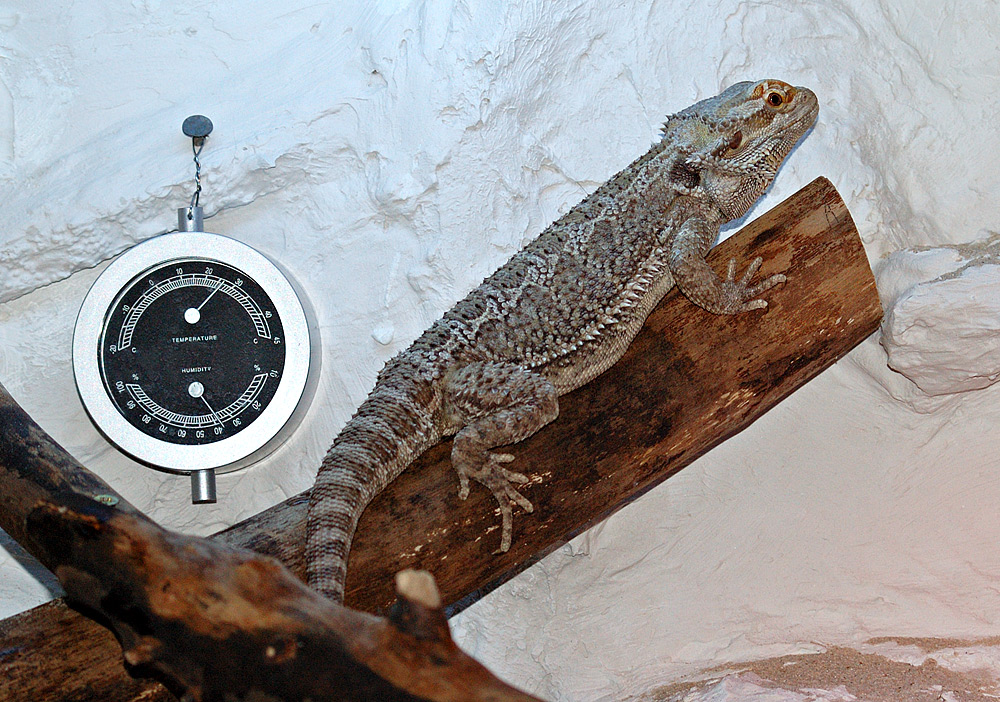
Updated September 23, 2026. Every figure below was read on that date from the sources listed at the end of this page. Temperatures are given in both scales; humidity figures are relative humidity measured inside the enclosure, not room humidity.
A bioactive enclosure is not a decorating style. It is a second animal system running underneath the first one: live soil, live plants and a live invertebrate colony, all of which need conditions of their own. The reason first builds fail inside two months is almost never the plants. It is that the soil colony and the lizard want opposite things, and the build quietly resolves the conflict in the colony's favour.
A bioactive floor is a moisture system. A Pogona is not a moisture animal.
Start with the two sets of published requirements side by side. The Merck Veterinary Manual gives a bearded dragon a preferred optimal temperature zone of 25-32 °C (77-90 °F) and a relative humidity band of 20-30 percent, rising only while the animal is in shed. The University of Florida IFAS extension sheet on springtails describes animals that live in moist soil, feed on fungi, fungal spores and damp decaying vegetation, and are found indoors wherever humidity is high and organic material stays wet.
Those are not the same enclosure. A cleanup crew that is thriving is usually a sign that some part of the floor is wetter than 30 percent relative humidity, and a floor that is uniformly dry enough for the lizard will not hold a springtail population for long. This is the trade that the build has to make deliberately, in one place, at a measured size - not accidentally, across the whole tank.
The seven numbers to hit before any soil goes in
| What is being set | Published figure | What gives way first if it is wrong |
|---|---|---|
| Air gradient, warm end to cool end | 25-32 °C (77-90 °F) | Appetite, then digestion of whole feeder insects |
| Basking surface | About 5 °C above the air gradient | The animal abandons the basking site and thermoregulates against the glass |
| Night temperature | About 5 °C below the daytime gradient | Nothing visible for weeks, which is the problem |
| Relative humidity | 20-30 percent, higher only during shed | This is the number a bioactive floor pushes on hardest |
| UVB wavelength and lamp distance | 290-300 nm; fluorescent tube under 30 cm (12 in) from the animal | Bone, silently, with no outward sign until it is structural |
| UVB lamp replacement | Every 9-12 months | Output, long before the tube stops making visible light |
| Photoperiod | 12 hours per day for general maintenance | Feeding rhythm and seasonal behaviour |
All seven come from the same Merck husbandry tables, which is worth saying plainly: a build can be argued about, but these are the figures a veterinarian is likely to be reading from. Note what is missing from that list - there is no published substrate depth, no soil recipe and no required plant count. Those are build preferences. The seven above are not.
Where the first sixty days actually go wrong
Three patterns account for most early bioactive failures, and each one is a measurement problem rather than a taste problem.
The floor is misted to keep the colony alive. Springtails need damp organic material. A keeper who waters the whole substrate daily to stop the culture dying has moved the enclosure out of the 20-30 percent band, usually without ever putting a hygrometer probe at floor level, because the only gauge in the tank is stuck to the glass at mid-height.
The soil is added before the heat and light are proven. Deep substrate changes how the enclosure holds and sheds heat, so any temperature log taken before the soil went in no longer describes the tank. The basking surface reading in particular moves when a heat lamp is aimed at dark damp soil instead of bare glass or tile.
The lamp distance is measured to the floor. Merck's figure is the distance from the lamp to the animal. On a deep bioactive floor with a raised hardscape, a dragon sitting on top of a branch can be much closer to the tube than the same dragon on a bare-bottom setup - and a dragon down in a dug burrow is much further away. The distance is not a property of the tank; it is a property of where the animal is standing.
Layer by layer, and the job each layer has to do
A drainage layer exists to hold water below the root zone so the surface can stay dry. In a build for a desert species that is a strange goal, because there should not be enough water going in to need draining. If the build needs a deep drainage layer to function, that is a signal that the watering schedule is wrong for the animal, not that the layer is missing.
The substrate itself is where the impaction argument lives, and it is worth restating that argument in the terms the veterinary literature actually uses. Merck's guidance on substrate is specific about material rather than about philosophy: gravel and pebbles are called out as difficult to clean and often ingested, with potential gastrointestinal obstruction as the result, while newspaper, artificial turf and organic particulates are listed among the suitable materials. The dividing line in that guidance is particle size and cleanability, not whether the floor is alive.
Hardscape is a structural question. Anything that a rock or branch sits on will compact and shift as invertebrates work the soil and as the dragon digs. Heavy pieces belong on the glass, with substrate filled in around them, so that a dug-out tunnel cannot drop a rock.
Plants are the part most likely to be added first and most likely to fail last - a plant can look alive for six weeks in conditions it will not survive in, so plant survival is a poor early signal that the build is working.
The cleanup crew has a development time, and it is longer than most people's patience
This is the number that reorders the whole build schedule. The UF IFAS sheet puts springtail development at five to eleven weeks from egg to adult, with adults normally around 1 mm long, breeding year-round, feeding on fungi and damp decaying vegetation. Run that forward: a culture seeded on the same day the animal moves in will not have produced its first home-grown adult generation until somewhere between week five and week eleven of the animal living there.
For the whole of that window the soil is being asked to process waste with whatever invertebrates arrived in the starter cup, while a keeper watching a thin population is tempted to do the one thing that will damage the lizard - add water. Seeding the culture roughly eight weeks before the animal arrives removes that temptation entirely, and it costs nothing except calendar time.
One damp corner, measured, rather than a damp tank
The workable resolution is a moisture gradient that mirrors the temperature gradient. Keep the deepest, dampest soil in the cool corner, under leaf litter and out of the basking beam, and water only that corner. Put a probe hygrometer at floor level in the warm half - not on the glass, not at mid-height - and treat any reading that sits above 30 percent outside of a shed as a watering error to be corrected at the next cycle, not an emergency to be fixed with a fan.
A second probe in the damp corner is genuinely useful, because it converts an argument into two numbers. If the damp corner reads high and the warm half reads inside the band, the build is doing what it was designed to do. If both read high, the enclosure has stopped being a desert enclosure with a wet corner and has become a humid tank with a hot lamp in it.
A sixty-day build calendar, counting backwards from the animal
| When | What happens | What has to be true before moving on |
|---|---|---|
| Week -8 | Substrate in, culture seeded, no animal, no plants yet | Nothing - this week only starts the clock the invertebrates run on |
| Week -8 to -5 | Lights and heat run empty on the 12-hour photoperiod | Twice-daily log of basking surface, warm air, cool air, floor humidity |
| Week -6 | Plants go in and root | The log has not moved out of band since the soil went in |
| Week -4 | First locally bred springtail adults become possible | Visible activity in the damp corner only, not across the floor |
| Week -2 | Final dry run | Seven consecutive days inside every figure in the first table |
| Day 0 | Animal moves in, after its own quarantine elsewhere | Merck recommends 3-6 months quarantine for a new reptile, served in a plain enclosure |
| Day 1-14 | Daily log continues, with weight and where the animal sits | Basking site is being used; no digging into the damp corner to cool off |
| Day 15-60 | Weekly log; lamp age recorded | UVB tube replacement date written on the tube, 9-12 months out |
The calendar is the actual deliverable of this article. Every published figure above can be met by a plain enclosure on day one; what a bioactive build adds is a set of biological clocks that do not care about a weekend.
Hygiene rules that change once there is live soil in the room
Live substrate means more handling of wet organic material, and that changes the hygiene picture rather than the animal's own risk. The CDC's guidance on reptiles and amphibians names children under five, adults over 65 and people with weakened immune systems as more likely to get sick, keeps reptiles and their equipment out of kitchens and anywhere food is prepared, stored, served or eaten, and rules out the kitchen sink for cleaning or for thawing feeders. Bathtubs are only acceptable if thoroughly cleaned and disinfected afterwards. Where soap and running water are not available, the CDC specifies hand sanitiser of at least 60 percent alcohol. For scale on why the rules are written this tightly, the CDC credits the 1975 ban on selling turtles under four inches with preventing an estimated 100,000 Salmonella infections among children.
The practical consequence for a bioactive build: mixing substrate, rinsing leaf litter and washing hardscape are all jobs for a utility sink, a garden hose or a dedicated tub, and the mixing should happen before the enclosure is in a bedroom.
Tip: Nearly every failure described above is invisible without two probes rather than one - a floor-level reading in the warm half and a second in the damp corner. A basic digital probe thermometer and hygrometer is what turns the build calendar above into something you can actually sign off. (These are Amazon Associate links - we may earn a small commission on qualifying purchases.)
What follows from the numbers, for a first enclosure
If this were a first setup being planned today, the defensible order is to run the enclosure as a plain, cleanable, bare-floor habitat for the animal's entire quarantine period, and to build the bioactive floor in a second enclosure alongside it on the eight-week clock the springtails impose. That splits the two hard problems instead of stacking them: the first weeks with a new dragon are already a period of unfamiliar behaviour, and adding a soil system whose own failure signals are subtle makes it much harder to tell which system is in trouble. The counter-argument is real and worth stating - moving an animal between enclosures is itself a stressor, and a keeper with limited space may only get one shot. If that is the situation, the compromise that holds up is the plain floor first and the live floor later, because converting a working dry enclosure to bioactive is a reversible decision, while diagnosing a sick animal in a tank you do not yet trust is not.
The published record also does not settle everything. Merck lists organic particulates among suitable substrate materials while flagging ingestible gravel and pebbles as an obstruction risk, which leaves the middle ground - loose soil mixes - as a judgement call rather than a settled recommendation. Where the sources stop short, the cheaper direction to be wrong in is the dry, shallow, cleanable one: an under-planted enclosure costs a keeper some aesthetics, while an over-watered one costs the animal its humidity band every day it runs.
Elsewhere on this site
- The CDC Salmonella warning about bearded dragons, and the hygiene routine the data supports
- What to do when the power goes out and the heat stops
- Corn snake care: enclosure, feeding and health for beginners
This article is general husbandry information, not veterinary advice for an individual animal. A dragon that is not eating, not basking, or losing weight needs an exotics veterinarian, not a change of substrate. Rules on keeping and moving reptiles differ by country, state and municipality - check the ones that apply where you live before buying an animal or an enclosure.
Sources, each read on September 23, 2026
- Merck Veterinary Manual - Management of Reptiles: POTZ 25-32 °C, humidity 20-30 percent, basking and night offsets, UVB 290-300 nm, lamp under 30 cm, replacement every 9-12 months, 12-hour photoperiod, quarantine 3-6 months, substrate cautions.
- University of Florida IFAS Extension (EDIS IG124) - Springtails: moist soil and high-humidity habitat, diet of fungi and damp decaying vegetation, adult size about 1 mm, five to eleven weeks from egg to adult, year-round breeding.
- CDC - Reptiles and Amphibians, Healthy Pets Healthy People: higher-risk groups, kitchen and food-area exclusions, kitchen sink and bathtub rules, 60 percent alcohol sanitiser, the four-inch turtle ban and its estimated 100,000 prevented child infections.
- Washington State University Veterinary Teaching Hospital - Bearded dragon husbandry.
Start Here: every care guide by species · About · Privacy Policy


Comments
Post a Comment